Pairs Trading Tools | Pair Trade Finder & TradingView Indicators

Pairs trading depends on structured research rather than guesswork. Traders study how two securities move relative to each other and analyze whether temporary pricing differences may occur. Identifying these opportunities requires access to reliable data, statistical evaluation, and tools capable of analyzing large groups of securities.

Manual chart comparison rarely reveals deeper patterns across the market. Dedicated trading tools address this limitation by scanning many instruments, measuring statistical alignment, and visualizing how the relative price spread evolves.

A pair trade finder helps identify securities with historically stable statistical behavior. While specialized pairs trading indicators assist with monitoring those pairs on charting platforms. Together, these tools help traders evaluate price dynamics and historical divergence before making trading decisions.

This article explains how pair trade finders, pairs trading indicators, and TradingView-based monitoring tools support the research and analysis process.

Pairs Trading Tools for Market Scanning and Research

Modern financial markets generate enormous amounts of price data. Equity markets alone contain thousands of tradable securities. Reviewing them individually to locate statistically related assets would require substantial time.

Pairs trading tools automate this research stage. These systems scan large market universes and highlight securities that historically move in a coordinated manner. Instead of reviewing charts one by one, traders receive a shortlist of statistically interesting candidates.

Many traders then monitor those candidates inside charting platforms. Custom TradingView indicators, for example, can display the spread or ratio between two assets directly on the chart. This allows traders to observe how the relative pricing evolves.

These tools do not predict market direction. Their purpose is to organize market data so traders can evaluate relative pricing behavior and identify potential divergence scenarios that may deserve further analysis.

Pair Trade Finder

A pair trade finder scans financial markets to locate securities with measurable statistical alignment. Instead of focusing on individual charts, the system evaluates large sets of assets simultaneously.

Manually identifying these relationships would require reviewing hundreds or thousands of charts. Automated pair scanning tools accelerate this process by highlighting statistically interesting combinations.

Market Universe Filtering

The first stage of the process is defining a suitable market universe. Traders often begin with securities that share similar economic drivers.

Typical filters include:

  • Sector or industry classification
  • Market capitalization range
  • Average daily trading volume
  • Exchange listing criteria

Filtering ensures that candidate assets operate under similar economic conditions. Comparing unrelated companies can produce misleading results because their price movements may be driven by different macro factors.

Once the universe is defined, the system evaluates statistical behavior among the remaining securities.

Statistical Relationship Measurement

The scanning system measures how securities behave relative to each other across time. Several statistical techniques are used to evaluate this behavior.

Common measurements include:

  • Rolling correlation patterns
  • Regression modeling between price series
  • Spread volatility analysis
  • Stability across multiple time windows

These tradingview pairs trading strategies highlight pairs where price movements historically followed similar patterns.

However, high correlation alone does not guarantee a reliable trading pair. Some assets move together only during specific market cycles. For this reason, robust pair scanning systems analyze whether statistical stability persists across different periods.

Ranking Candidate Pairs

After measuring statistical alignment, the system ranks candidate pairs according to predefined criteria.

Traders may focus on pairs with:
  • Stable historical price relationships
  • Moderate spread volatility
  • Sufficient liquidity for trade execution

Ranking reduces a large universe of securities to a manageable shortlist for further research.

Real Market Example: Visa and Mastercard

Payment processing companies Visa (V) and Mastercard (MA) are a potential pair. Both operate in the global electronic payments industry.

Their revenues depend on transaction volumes and consumer spending trends. As a result, their stock prices often display long-term statistical alignment.

Example Divergence Scenario

During one earnings cycle, Visa reported stronger cross-border transaction growth than Mastercard. Following the announcement, Visa’s stock temporarily outperformed.

Over a short period, the Visa/Mastercard price ratio widened from approximately 1.03 to around 1.08, moving outside its recent trading range.

A trader monitoring this pair would not automatically place a trade. Instead, the divergence raises several analytical questions:

  • Is the divergence supported by long-term fundamental change?
  • Did similar gaps appear during previous earnings seasons?
  • Has the spread historically returned toward its prior range?

This type of evaluation illustrates how pair scanning tools highlight potential opportunities while leaving the final analysis to the trader.

Pairs Trading Indicators for TradingView

Once a candidate pair is identified, traders often monitor it through charting software.
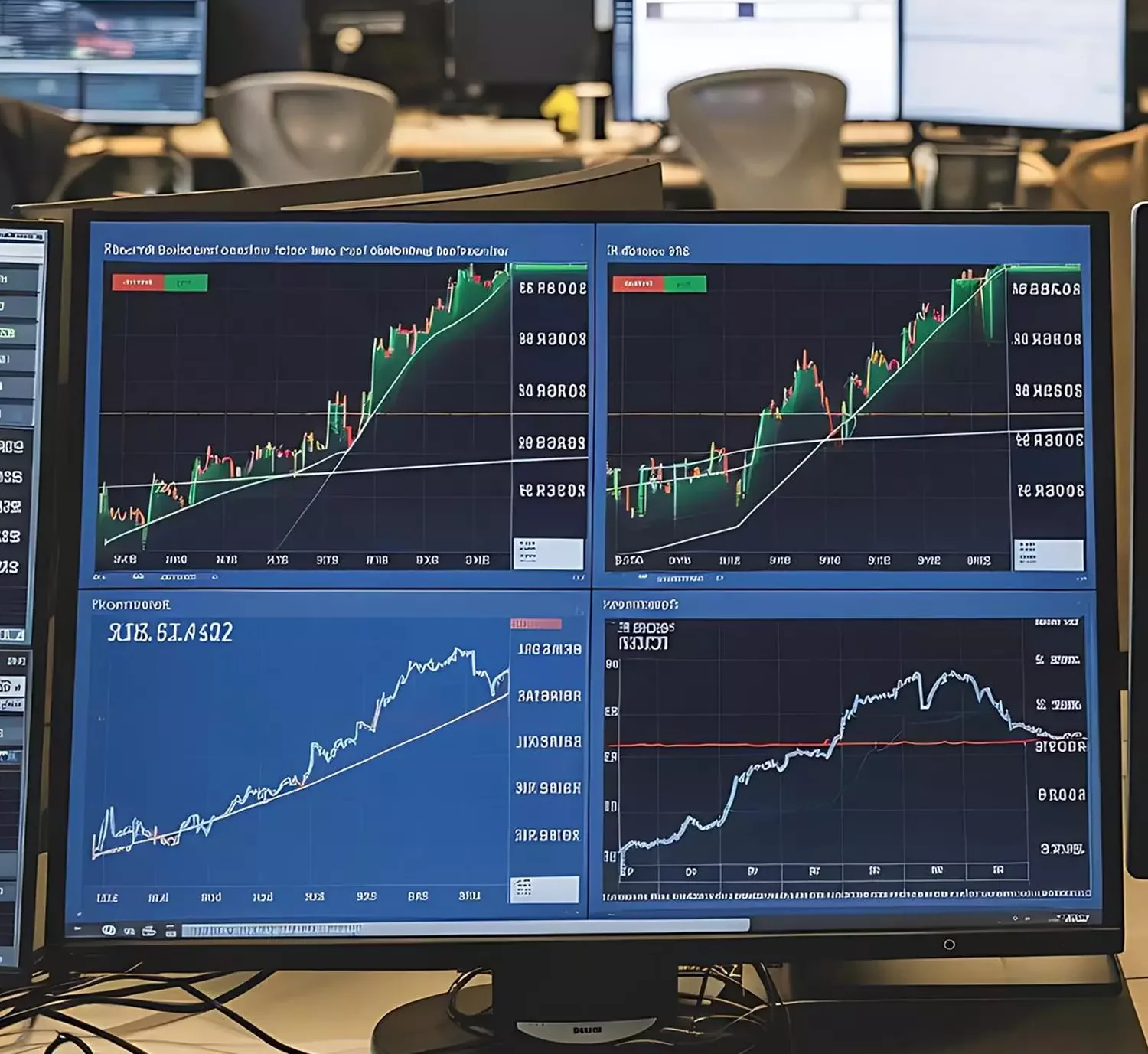
Charting platforms provide visual context that helps traders analyze how relative pricing evolves over time. On TradingView, custom scripts can transform two separate price series into a single spread or ratio chart.
A pairs trading indicator calculates this derived series and plots it directly on the chart, making it easier to observe divergence and convergence behavior.

This structure differs from directional trading strategies. The trader studies interaction rather than price direction alone. However, the method contains limitations. Relationships weaken when industry structure changes.
Spread Construction Methods

Creating a spread series is the first step in visualizing relative pricing. Several methods are commonly used.

Examples include:
  • Price ratio between two assets
  • Regression-based residual spread
  • Dollar-neutral price difference

Each method provides a different view of how the assets behave relative to each other.

For instance, a ratio chart comparing Visa and Mastercard illustrates how the relative valuation of the two companies changes through time. When the ratio rises, Visa has outperformed Mastercard. When it declines, Mastercard has gained relative strength.

Monitoring Statistical Deviation

Pairs trading indicators often include statistical reference levels that help traders interpret spread behavior.

Common visual tools include:
  • Rolling averages
  • Standard deviation bands
  • Historical percentile ranges

These levels provide context for determining whether a spread movement falls within its normal historical range or represents an unusually large deviation.

Combining Spread Indicators With Other Tools

Relative tradingview pairs trading pricing analysis is often combined with other forms of market data.

Traders may review:
  • volatility indicators
  • trading volume changes
  • broader sector trends

For example: 
During periods of unusually high volatility, spreads temporarily widen beyond their historical averages. Low-liquidity trading sessions may exaggerate price differences without indicating meaningful structural change.

Chart-based monitoring, therefore, helps traders evaluate whether a statistical relationship remains stable under current market conditions.

How Trading Tools Identify and Monitor Pairs

Professional trading research generally follows a structured workflow. Well-designed tools organize the analysis into several stages.

Data Preparation

Reliable historical price data forms the foundation of any statistical analysis.

Before evaluating securities, datasets are typically prepared by:

  • Adjusting for stock splits and corporate actions
  • Synchronizing trading calendars between assets
  • Removing irregular data caused by trading halts

Clean datasets ensure that statistical measurements reflect genuine market behavior rather than technical anomalies.
Relationship Modeling

Once the data is prepared, the system evaluates how assets move relative to each other.

Analytical techniques often include:

  • correlation stability across rolling periods
  • regression modeling between price series
  • spread variance measurement

These techniques help determine whether two assets maintain a consistent statistical connection across time.

Trading pairs whose behavior fluctuates widely across periods typically receive lower rankings because their relationships lack stability.
Spread Stability Evaluation

After constructing a spread series, the system analyzes how the spread behaves historically.

Important characteristics include:

  • typical deviation ranges
  • frequency of extreme divergence
  • average speed of historical convergence

Understanding these patterns helps traders estimate how volatile the spread may become during future market movements.
Liquidity Verification

Even statistically interesting trading pairs must remain practical to trade.

Professional tools, therefore, evaluate liquidity conditions before presenting candidate pairs.

Key metrics include:

  • average daily trading volume
  • bid-ask spread width
  • market depth during active sessions

Continuous Monitoring

Market relationships evolve. A pair that behaved consistently for years may weaken after structural industry changes.

Earnings announcements, regulatory shifts, technological disruption, or macroeconomic events can all influence how companies perform relative to each other.

So, Pair scanning systems update their analysis regularly. Traders review current statistical conditions rather than relying on outdated data. Also, TradingView pairs trading strategies help you identify and trade price divergences between correlated assets to capture low-risk, market-neutral opportunities.

Conclusion

Pairs trading research relies on structured data analysis rather than manual chart observation. Large financial markets contain thousands of tradable securities, making it difficult to identify statistically related assets without analytical tools.

A pair trade finder helps narrow the search by scanning markets and identifying securities with stable statistical behavior. Traders can then monitor these candidates through charting platforms using pairs trading indicators that visualize spread or ratio movements.

Traders who focus on relative value strategies often rely on specialized research platforms that combine pair discovery, statistical analysis, and spread monitoring within a single environment.

FAQs

What does a pair trade finder do?

A pair trade finder scans large groups of securities and identifies assets that show consistent statistical alignment. It ranks candidate pairs using metrics such as correlation stability, spread volatility, and liquidity conditions.

How does a pairs trading indicator work on TradingView?

A pairs trading indicator derives a spread or ratio series from two price streams and displays the statistical relationship between the assets on a chart. This allows traders to monitor divergence and convergence behavior over time.

Can TradingView indicators replace statistical analysis?

Chart tradingview indicators provide visual insight, but they rarely replace deeper quantitative evaluation. Many traders use charting platforms for visualization while performing more detailed calculations in separate analytical tools.

Why do some trading pairs stop working?

Statistical relationships can change when economic conditions shift. Mergers, regulation changes, technological disruption, or supply chain changes may alter how companies perform relative to each other.

Are trading indicators enough to build a full trading strategy?

Trading indicators support analysis, but represent only one part of a trading framework. Traders also consider liquidity, risk management rules, position sizing, and broader portfolio exposure before executing any trade.